I was the lead interactive designer at San Diego Gas & Electric when we started redesigning their website in 2011. It was a major undertaking with thousands of pages of content and strict regulatory standards to meet. The results redefined industry standards for web design.
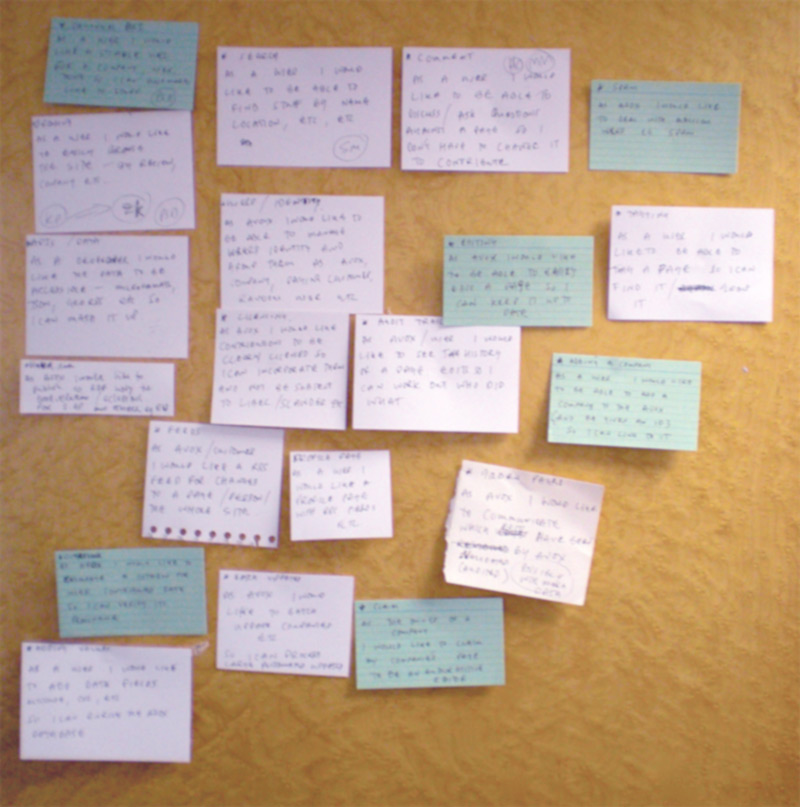
Full agile might not be the right solution for every scenario, but its principles of flexible planning, early delivery, iterative improvement, et al are applicable to most large-scale interactive projects.

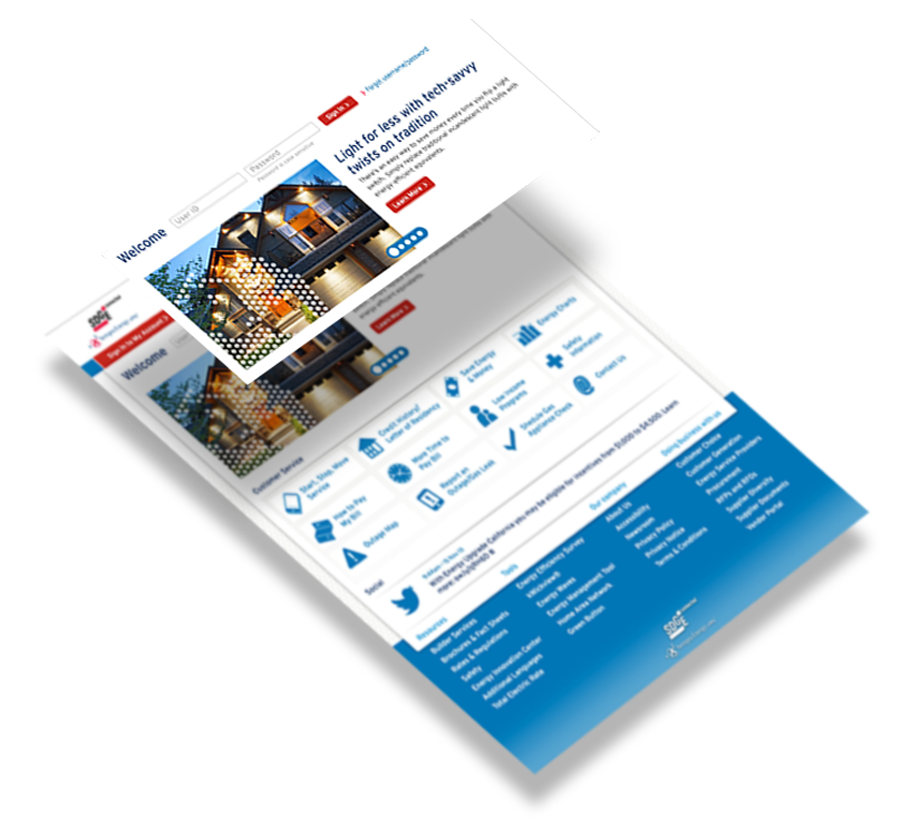
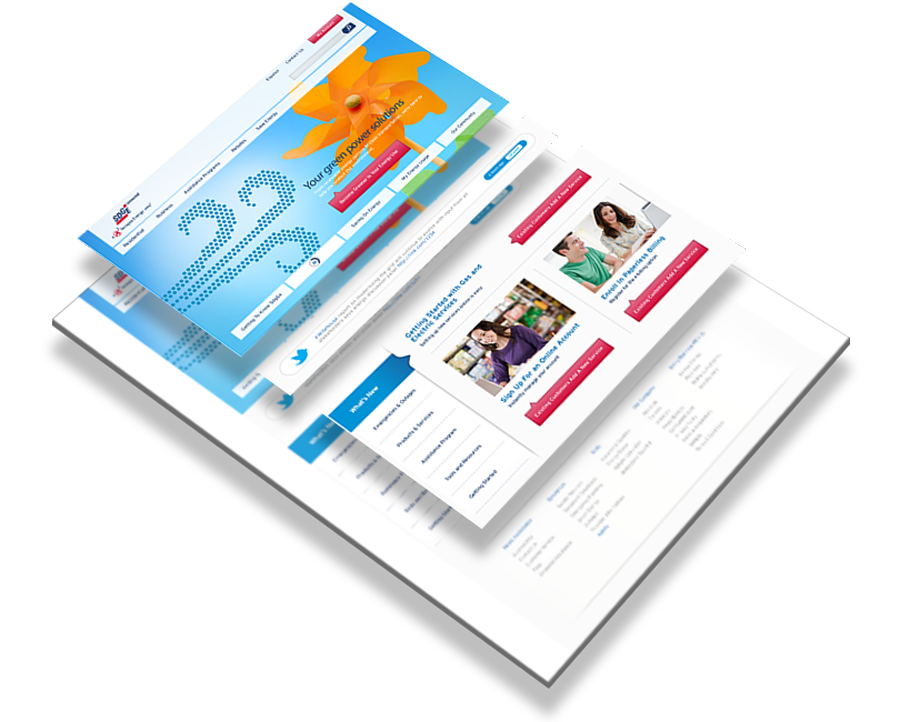
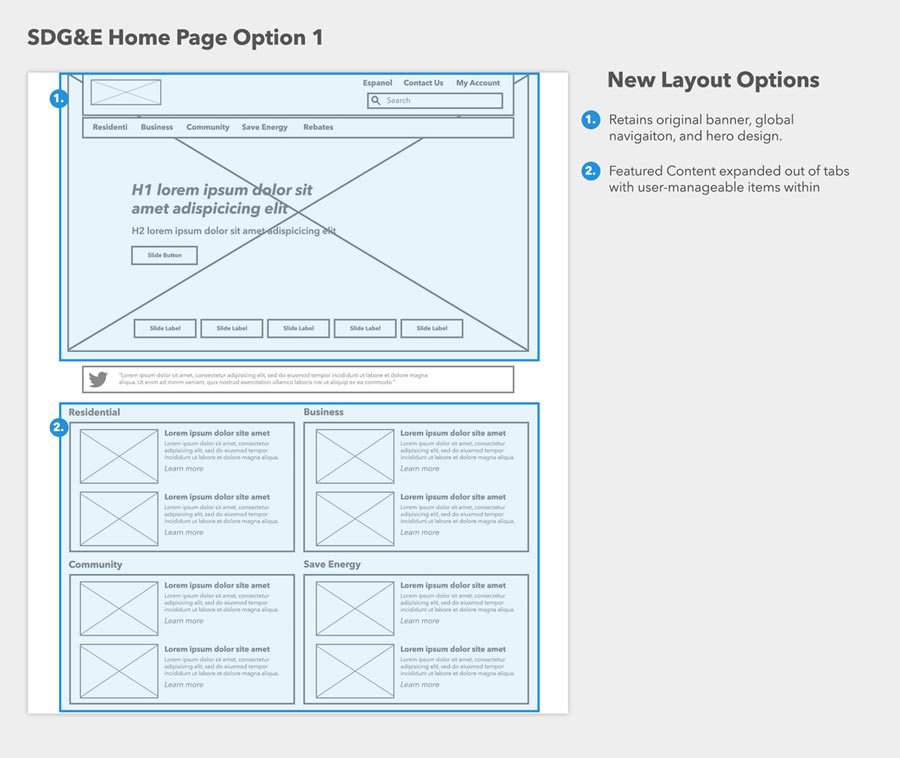
Our first version featured a large hero image, and large amount of tabulated featured content.

Six months into the project, we launched our MVP. We spent another half of a year iteratively dialing-in styles and structures, developing advanced features, and testing the site via usability sessions and analytics.


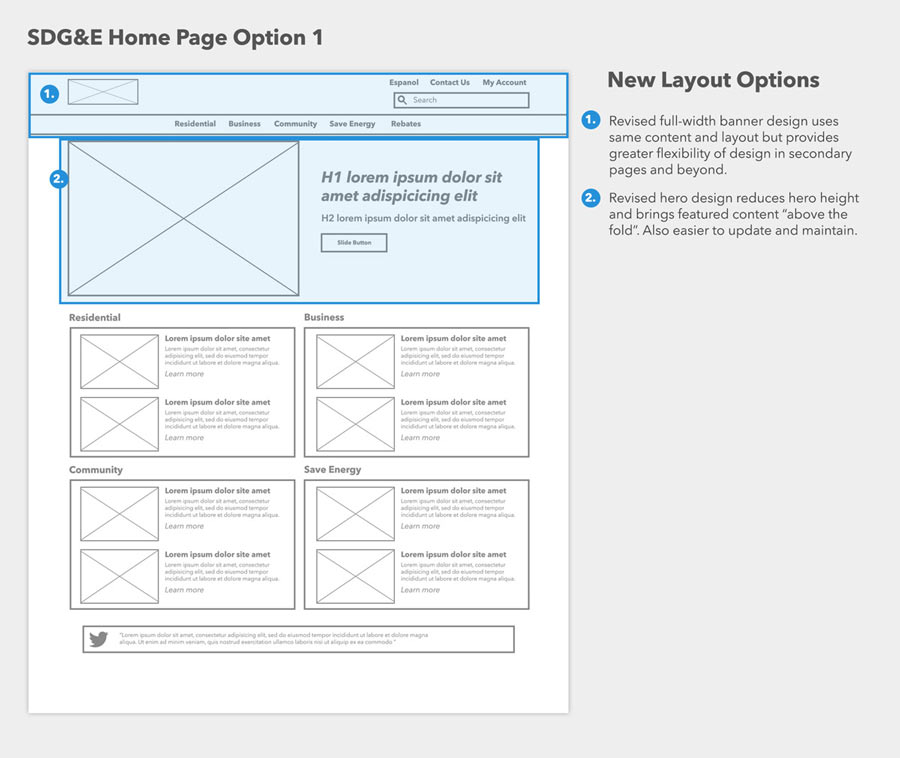
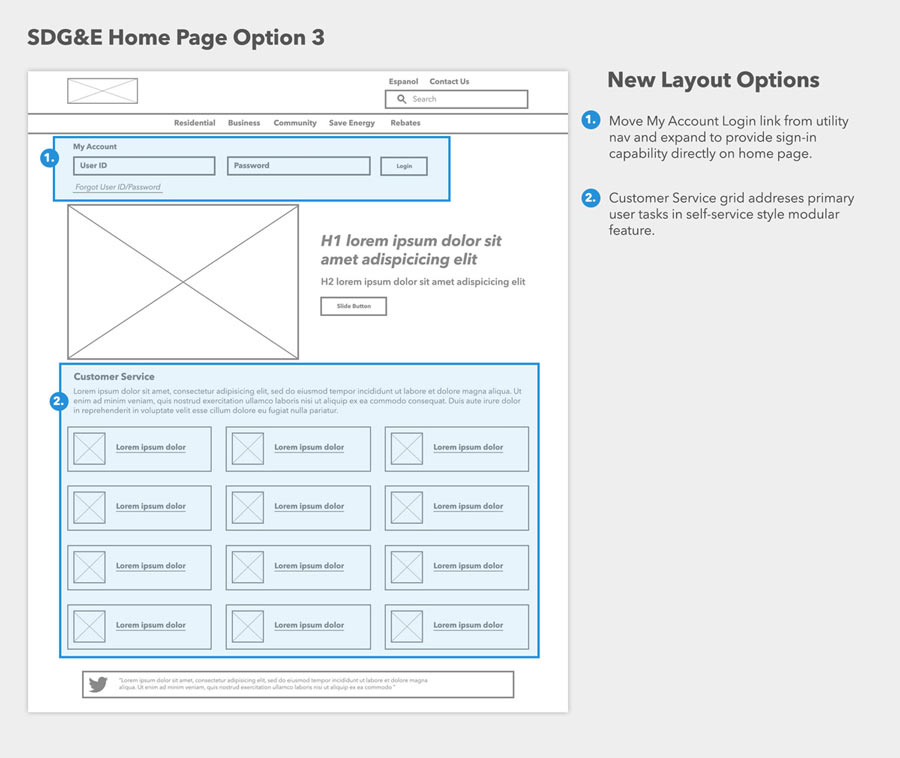
We explored options to revise the homepage based on analytics and usability testing.

We refactored our hero section to reduce it’s height, matching median user monitor analytics as well as to make it easier to update and maintain for internal stakeholders.

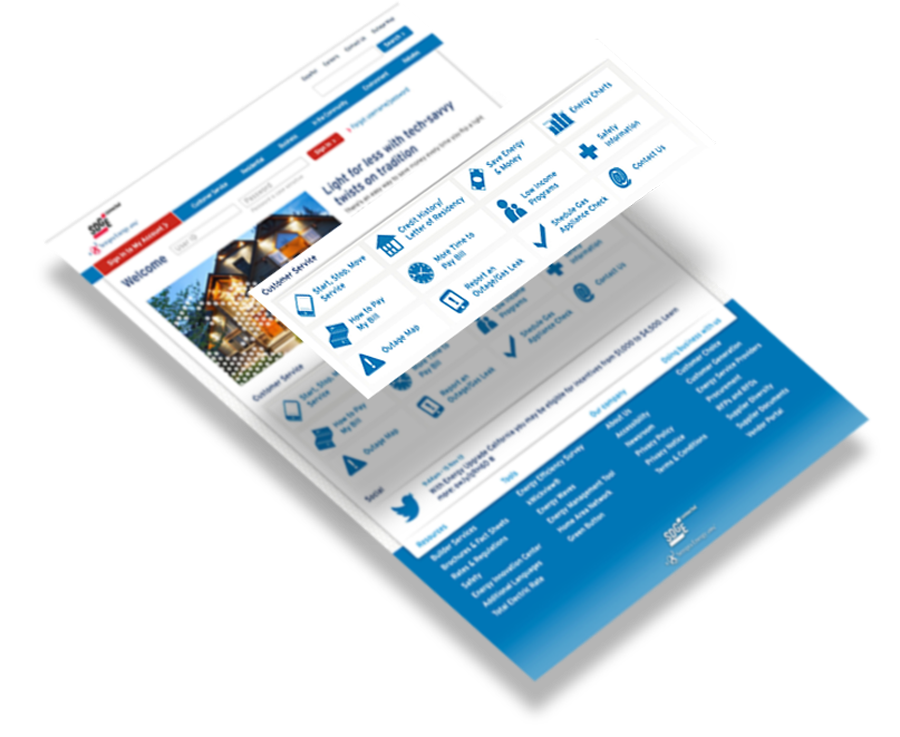
The tabulated featured content was replaced with a “Customer Service Grid” representing the top visited content with the goal of reducing call volume to the call center.

We retooled the homepage to present a grid of customer service options, consolidating the most popular items from around the site. This was a great success for both internal stakeholders as well as customers.
.png)
When we started the project, responsive web design was still a novel idea, and “Mobile First” hadn’t even been released. By the time we launched our second major update, it was an obvious requirement, and we spent the next six months updating the entire site.