Governing Agent Output Beyond Templates
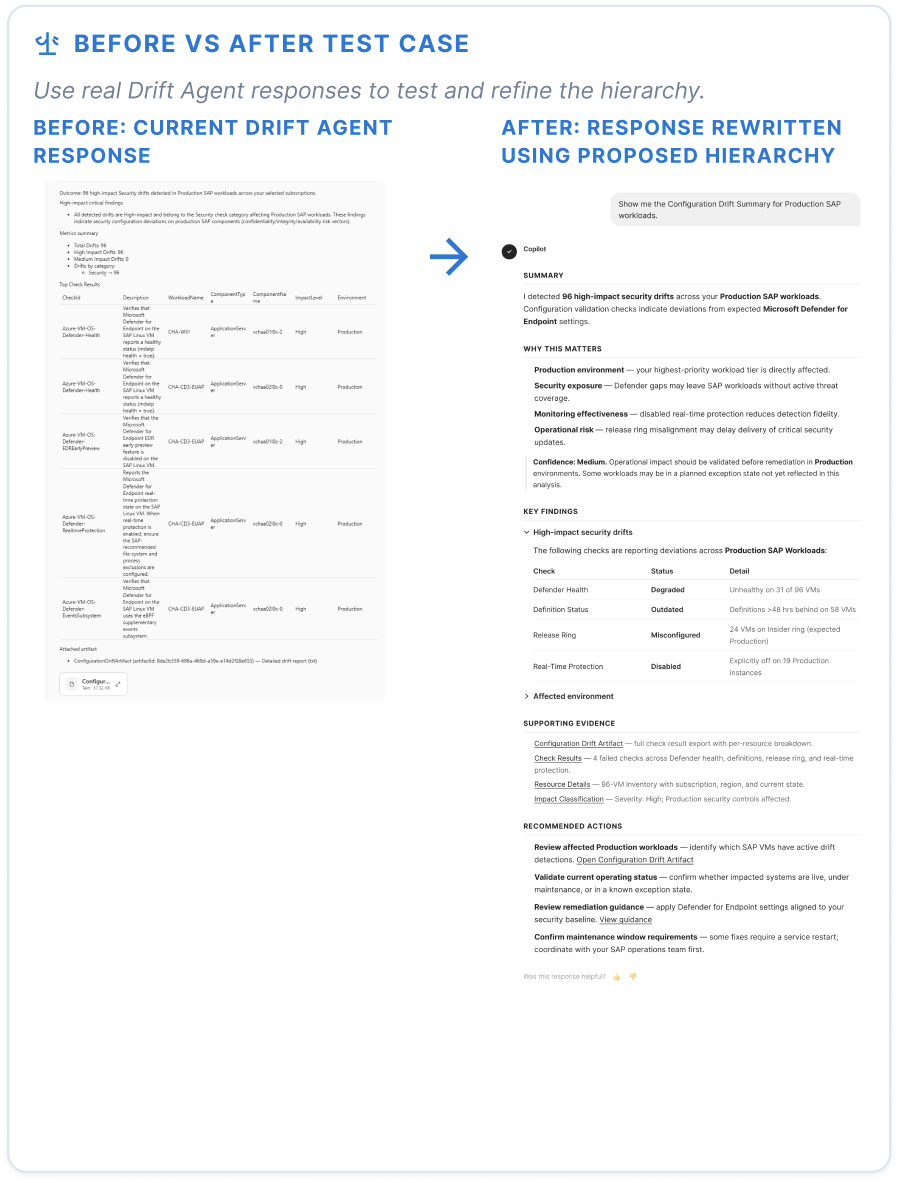
Scneario-based templates were a huge improvement in the usability of our agent output, but it is too prescriptive for longer-term improvements. Defining repsonse policies at the right layer can provide a governable space for UX to direct adaptive experiences across multiple UX surfaces.
- Role
- Senior UX Designer, partnering with content design, product, and engineering
- Timeline
- Sep 2026 – Present
- Outcome
- Implemented first-stage response guidance in the official Microsoft Ignite 2026 agent demo, ahead of private preview availability, and defined a roadmap for adaptive response guidance.
The problem
Scenario-based templates gave us a valuable baseline. They made responses more consistent and helped establish what a good answer should contain for a known task. But testing that guidance against a complex enterprise-grade system investigation revealed a limit: a response could follow the template and still give the wrong prominence to a finding, bury important evidence, or lose continuity between related details.
The problem was not simply that we needed more templates. We needed guidance for deciding, at runtime, what to include, what to lead with, and what to make available on inspection—based on the user’s task, workload context, severity, and evidence.
The roadmap
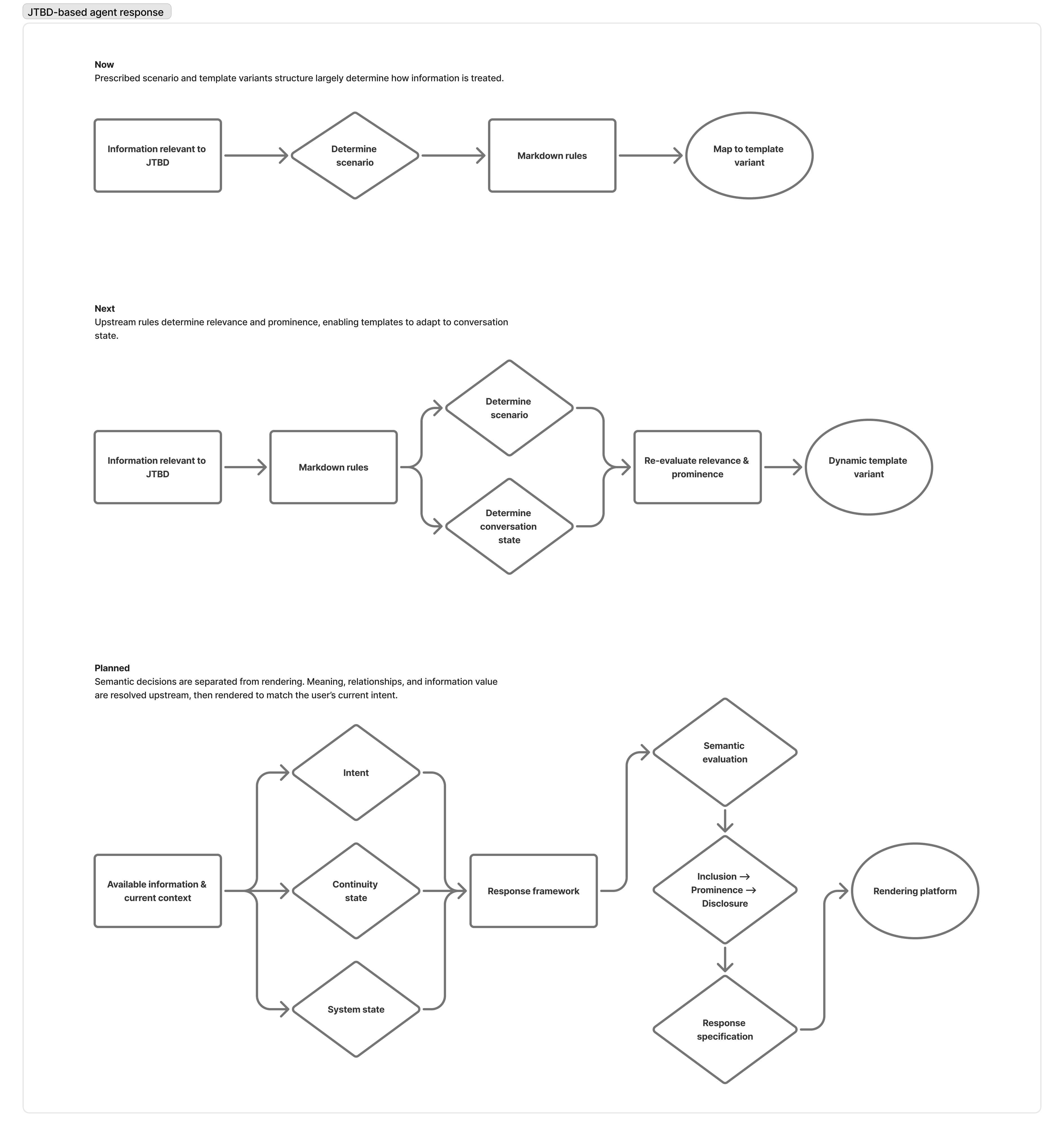
The roadmap moves from scenario-based templates toward guidance that can adapt to the user’s task, workload context, and available evidence. Each stage preserves the standards established by the last while giving the agent more flexibility in how it meets them.
The first milestone established a consistent baseline for known scenarios. The next stages build on that foundation by guiding not just response structure, but decisions about what to include, what to emphasize, and what to make available on inspection.
Milestone 1: Establishing a baseline
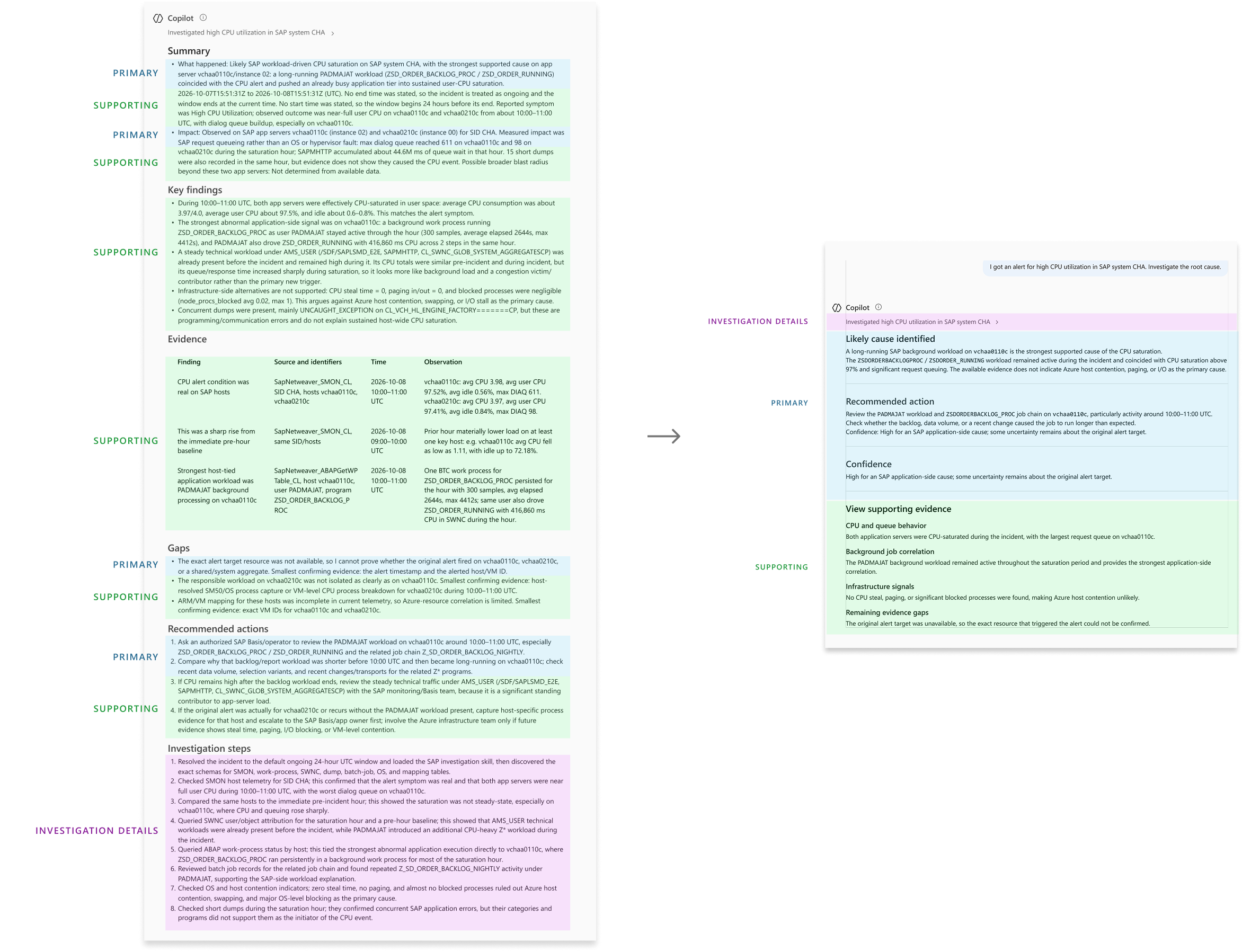
The first milestone was implemented in the official agent demo for Microsoft Ignite 2026. Working with a content designer, I developed scenario-based response guidance and authored it as Markdown policy files with rules and examples for the agent. I iterated with engineers until repeated demo runs followed the intended structure and content priorities.
This established a practical starting point: UX guidance could shape the agent’s response upstream, rather than only designing the interface around it. It also gave us a consistent answer to test against more complex scenarios.
What the baseline exposed
The SAP investigation showed that following a template is not the same as making a good content decision. A response could contain the expected sections yet still bury a consequential finding, separate a claim from its evidence, or repeat details that no longer served the user’s task.
That changed the question from “Which template should this scenario use?” to “How should the agent decide what matters in this response?”
The north star: governing decisions, not just structure
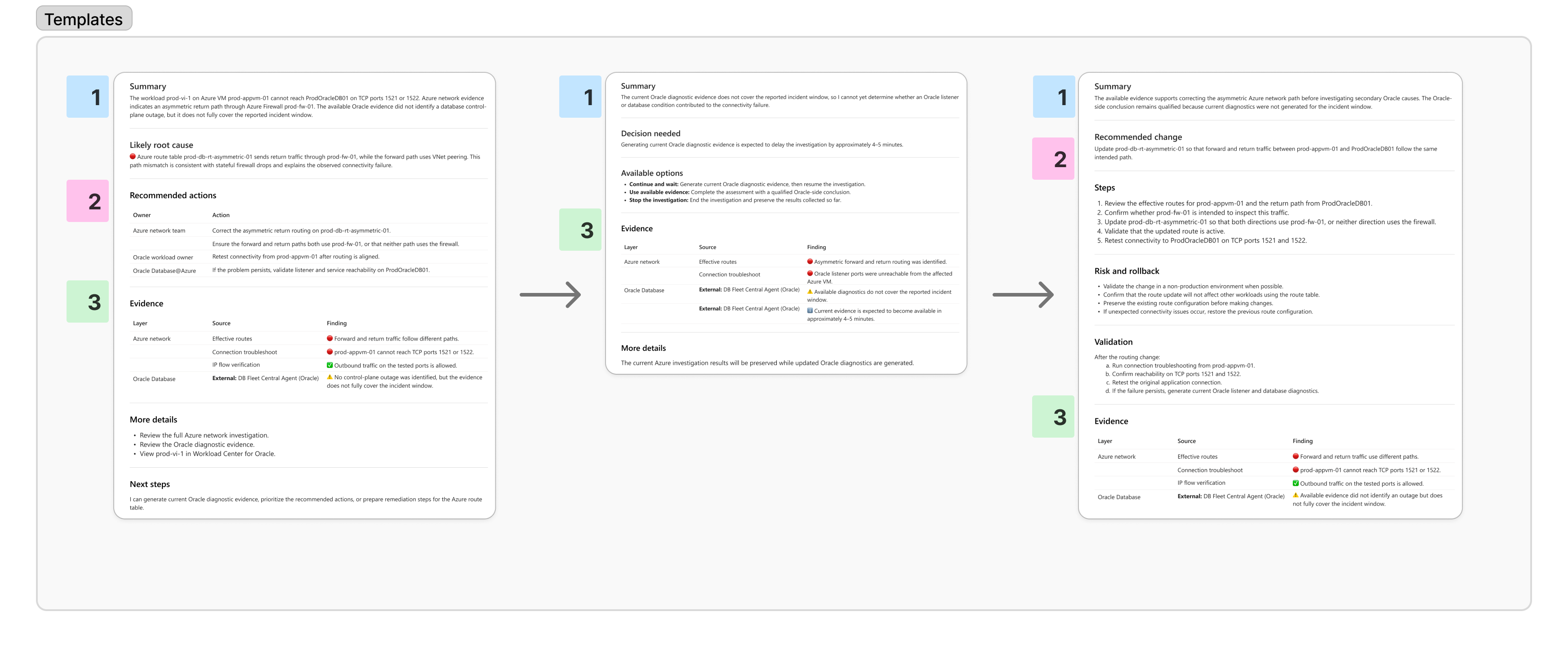
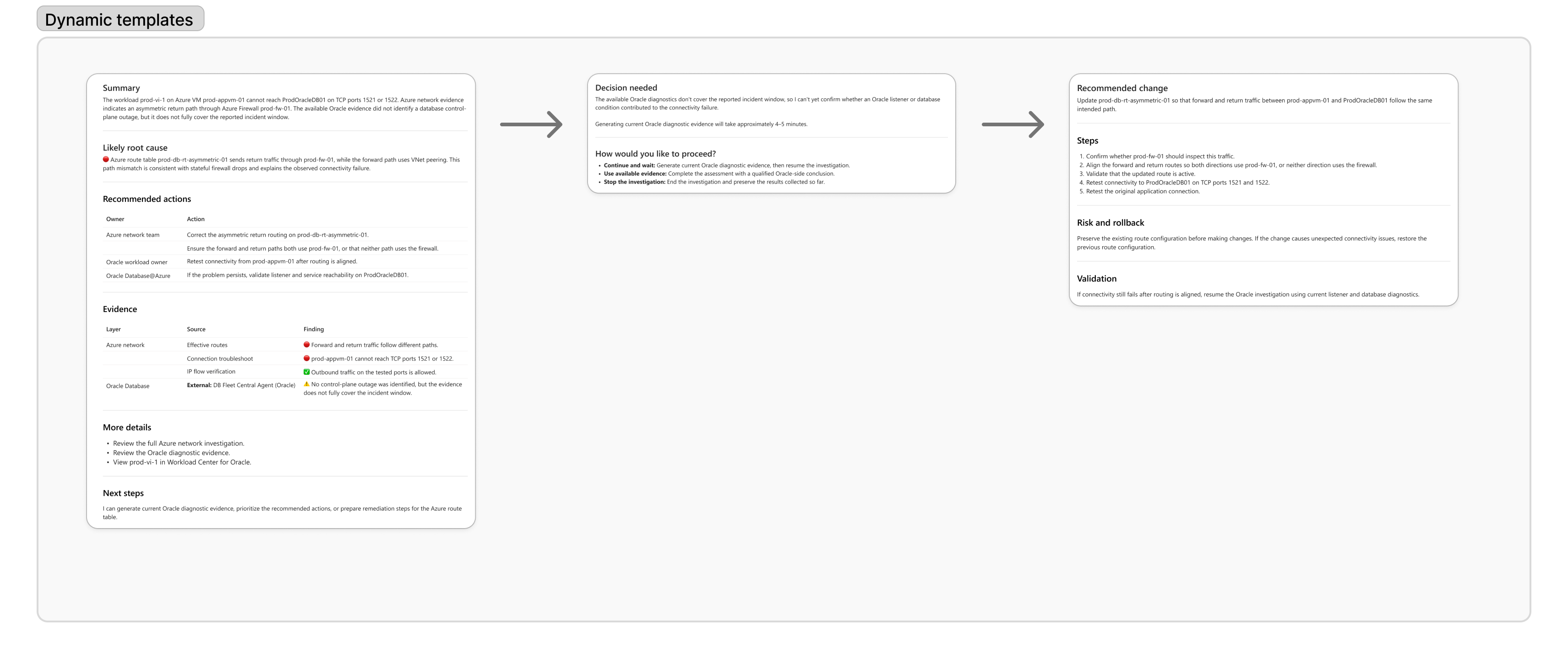
The proposed next stages give the agent guidance for evaluating information in context: what is relevant to the user’s task, what is consequential enough to lead with, what evidence supports it, and what can remain available on inspection. The response should preserve continuity with earlier turns and distinguish observed facts, inferences, and recommended actions.
The goal is not to remove structure. It is to make structure serve those decisions, so the agent can handle combinations of workload state, severity, and evidence that no single scenario template anticipated. This is a design direction, not a capability I’m claiming has shipped.
Impact
-
Shipped: milestone 1 is implemented in the official Microsoft Ignite 2026 agent demo, ahead of private preview availability
-
A new role for UX: design input now feeds the agent directly as policy, not just the interface around it
-
A path forward: the roadmap gives the team a shared plan for moving beyond templates